I've decided to stop with my #FridayReads posts, for now at least.
My main reason for this is that I want to focus on writing more reviews, and reading lots of books. Writing these #FridayReads posts costs energy I'd rather spend on other (blogrelated) things.
For 2016, I've decided to read very many new books. Books that are nominated for awards, to be precise. I'm going to be reading (or at least, trying to read), shortlisted books for some literary prizes.
I do hope you check back soon for my next review :)

Friday, 8 April 2016
Sunday, 20 March 2016
Review: The Catcher in the Rye
Title: The Catcher in the Rye
Author: J.D. Salinger
Year: 1951
Publisher: Little, Brown
Pages: 214

To be fair, though, the plot isn’t really of much value as it is mostly a character driven, technically written novel which is fed by thoughts and literary devices. I’ll try and explain what I mean.
Firstly, let's take a look at our main character Holden. He thinks a lot, and he voices these thoughts to us, the readers. But he doesn’t really act. He philosophises, has profound ideas, but I don’t think people around him are aware of this. He might seem outgoing, but he very much keeps to himself. For example: the main theme of this novel is losing innocence, becoming an adult. For the reader a recurrent phenomenon throughout the novel, but for Holden a constant struggle in his mind, always holding him back. He tries to prevent becoming older by not doing certain things associated with becoming an adult: he is, for instance, still a virgin. His not finishing school also symbolises this rebellion against growing up. Moreover, he loves the museum - a place that can capture a moment, stop time. He wants to stay young, a child, as he admires the innocence and naivety in children. But as he slowly starts to realise he cannot prevent becoming an adult himself, he wants to help other children, such as his sister, by being a catcher in the rye.
“Anyway, I keep picturing all these little kids playing some game in this big field of rye and all. Thousands of little kids, and nobody's around - nobody big, I mean - except me. And I'm standing on the edge of some crazy cliff. What I have to do, I have to catch everybody if they start to go over the cliff - I mean if they're running and they don't look where they're going I have to come out from somewhere and catch them. That's all I do all day. I'd just be the catcher in the rye and all”
Let’s now talk about the technical side of the novel. The difficulty in explaining this lies in the fact that this is a combination of writing-style, narrative techniques, and the use of symbols and motives. As I should be weary that I don’t turn this review into an essay, I’ll try to be brief.
The way in which The Catcher in the Rye is written, is odd. The style takes some getting used to, but you can’t really put your finger on what’s off. The swearing, the slang, repetition - all devices used by Salinger to make Holden feel like a real person, yet there’s distance. This, I eventually figured out, is created by the passive tense. It took some research (watching Crash Course videos) to find out exactly why Salinger would do this: Holden, the 17-year-old version recounting the story, is trying to create a distance between himself and his problems. He’s struggling a lot, and by doing this, it might seem as if all the issues really aren’t his. This, along with the interwoven symbolism, clues and motifs, as well as the impeccable ending, is what make this novel a masterpiece.
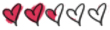
However, I didn’t really love The Catcher in the Rye at all. The ending made up for many of the issues I had, and the research I did afterwards made room for appreciation and added the extra star to my original two-star rating. I’m having a hard time putting into words what was the problem for me with this novel. I hated Holden, that’s one. I didn’t care for him at all. But generally, though, with other characters in other novels, this doesn’t necessarily mean I don’t enjoy reading about them. But Holden aggravated me. I found him dumb, annoying, arrogant and inconsiderable and as a result, I really didn’t want to read about him. This, along with the writing style - the constant swearing, odd short sentences - , made for an unpleasant reading experience. As I said, though, I do appreciate it now that I see how much care went into the development of this novel. I might not have enjoyed this book much, but I do think that Salinger is one of the most clever authors that ever existed.

Friday, 18 March 2016
Friday Reads
Although I don't have too much to say, I thought I'd best make a(nother) comeback with a #FridayReads.

At the beginning of the year, I had decided to start reading more Dutch books, and I'd been failing a little, because Dutch books are expensive and I generally still bought English books. Since my sister recommended me to get a library subscription and I listened (!) things have been going a lot better. I didn't really know where to get started reading contemporary literature, so I decided to browse around some literary prizes and I found that the Libris Literatuurprijs Shortlist had just been announced. I picked up a few of those from the library (offline as well as online as ebook), and that's what I've been reading for the past week. I finished two, and I'm currently reading the third one: Als de winter voorbij is (When Winter is Over) by Thomas Verbogt. Only three more to go!
You may now think that this 'reading Dutch' thing is going to ruin my English blog, but I promise you it isn't. I have quite a few things - reviews as well as other posts - planned out. This Sunday, you can expect a review of one of the most well-known American modern classics.
Have a great weekend! :)
Friday, 26 February 2016
#FridayReads

It's time for another #fridayreads! (two times in a row, you should be proud)
I did get quite a bit of reading done last week, so I finished Far From the Madding Crowd and it was amazing. I'll have a review up as soon as possible. I didn't read in either of the other two books I was reading last week - Scarlet and Justice so there's no use in updating on that. Check last week's post if you care to know what these books are about and what I think of them so far.
I did start a new novel, yet another one for my classics club, and I'm pretty excited about this, as I'm finally getting to know Holden Caulfield. That's right, I've finally gotten around to reading the book everyone read in highschool, but I didn't: Catcher in the Rye. I'm only a few pages in, but I am really enjoying this story about a sixteen-year-old boy who has just been expelled from prep school. Let's see where this widely-loved modern classic is going to take me!
Have a great reading week :)
Sunday, 21 February 2016
Review: The Dumb House by John Burnside
Title: The dumb house
Author: John Burnside
Year: 1997
Publisher: Vintage
Pages: 204

There are many reasons why this novel grabbed my attention, but to be honest, the reason I even heard of it was because of author and bookvlogger Jen Campbell, and the hype resulting from her mentioning the book. She spoke of it so passionately that halve of the booktube community started reading it, and ever since it was on my to-buy list. I had kind of forgotten about it when I was reviewing my list (I do this every once in a while, checking which books I should cross out) and when I saw this title, I looked it up. This is when I really became interested in reading it. It seemed every critic loved the novel, Burnside’s prose alongside the ingenious plot. Besides that, I also followed quite a few linguistic courses during my Bachelor’s and since, I’ve been interested in language development. This novel seemed like the perfect, albeit morbid, opportunity to combine this with my love for literature. So I bought it, and not long after, I read it.
It’s easy to be dissappointed when you’re beyond excited, knowing for sure you’ll love a novel. I was prepared to be dissappointed. But it turned out there was no need to be. This novel is all critics promised it to be. Not only is Burnside a brilliant writer, using language in such a clever and beautiful way to describe a clearly disturbed character and his thoughts, he also manages to make the reader feel almost criminal: you clearly don’t approve of what is happening, yet you’re interested in knowing the outcome.
But let’s back up to the depiction of our protagonist: Luke. It doesn’t take more than halve a sentence to know you’re dealing with an insane character. You don’t have to figure out he’s a psycho, and he clearly has some unresolved mommy-issues. But as you get deeper into the story, as you get to know him better, you actually learn you don’t know so much about him. The story is written from his perspective, meaning every aspect is biassed. This reminded my much of Lolita in which you follow a similarly perverse character and are made to think there is true love between a child and a grown man. The only reason you believe this is because the protagonist, through whom’s eyes you you see the story, believes it to be true. Reflecting these thoughts on The Dumb House you could argue that Karen and Lillian, for example, are likely to be very different from what Luke may want the readers to think. Now I don’t want to go into too much detail on this, but I thought this was an interesting concept (oh how I wish I was still a student, I would surely find an opportunity to write an essay on this).
Another interesting aspect of the novel is its structure. From the very start, you know what Luke has done, yet you don’t know the exact details until the very end. This may not be a very innovative way to tell a story, but in this case it worked particularly well. It sucks you in immediately, and it will never let you go. You want to know more and more, and even though you learn things along the way, they’ll only leave you with more questions.
I don’t want to talk too much about the actual plot, because I don’t want to spoil too much, but just know that the Burnside did his research, is insanely creative, and probably a bit mad. He did what not many other authors do – he found the perfect balance between good writing and a solid story: never having the one get in the way from the other.
All in all, this is a must read. Although it’s literary fiction, someone who might normally only read horror will also like it, and because of the way it intertwines language, psychology and philosophy, it’ll also be highly interesting for those who only read non-fiction.

Friday, 19 February 2016
Friday Reads

As a consequence of a lack of reading, there has also been a lack of blogposts. But now I've started reading, and enjoying it, again, so be prepared for more posts. First off, let's update you on what I'm currently reading.
Far From the Madding Crowd by Thomas Hardy
Ever since read Tess of the D'Urbervilles, I've been interested in reading more of Hardy's work. I was intrigued by his writing and his story telling and I decided to read another of his well-known novels. Especially because I've been wanting to see the newest adaptation of Far From the Madding Crowd, I chose this one. I'm currently at about 25% and I'm thoroughly enjoying it, even though it's much different from what I had expected. So far, it's not even a little bleak - as opposed to the depressing Tess, and though not always the smartest characters, they're not nearly as annoying as some of Tess'. I know now I should stop comparing the two, and continue reading Far From the Madding Crowd as a separate novel. I am interested to see how the story develops, though, because I'm pretty sure it will turn darker soon.
In case you're unaware of the plot, here's the blurb (because I'm having trouble summarising it myself):
Hardy's powerful novel of swift sexual passion and slow-burning loyalty centres on Bathsheba Everdene, a proud working woman whose life is complicated by three different men - respectable farmer Boldwood, seductive Sergeant Troy and devoted Gabriel - making her the object of scandal and betrayal.
Vividly portraying the superstitions and traditions of a small rural community, Far from the Madding Crowd shows the precarious position of a woman in a man's world.
Justice by Michael J. Sandel
I've always been interested in philosophy, but to be honest, I never read anything about it except for what I had to read for courses. Now I'm done with uni, and I'm kind of missing these obligatory texts. I discussed this with a colleague and he recommended this book. I bought it, and now finally have started reading it. And it's good. It basically discusses what's the 'right' thing to do in several scenarios, using many different philosophical points of view. I must say that I'm a person who's had to read a lot of theory devoid of examples in uni and although I found this difficult and sometimes craved a concrete example just to be able to understand certain theorists, I think this book could do with a few less examples. Sandel wants to reach a large audience, and this style of explaining does contribute to that: There's only few large pieces of text you'll have to get through, and every single idea is shown in examples. I started to find this tedious and consequently I haven't read in it for a good week. I'll start again, because I do find it interesting, and Sandel surely is a smart man I want to learn more from.
Scarlet by Marissa Meyer
Scarlet is the second book in the Lunar Chronicles: a science fiction young adult series of fairy tale retellings. The first one, Cinder follows a girl who's a cyborg, and the story resembles that of Cinderella. This one, you may have guessed, follows Scarlet and her adventures with her grandmother and a wolf (yes, it's Little Red Riding Hood). That is not to say these are standalones, it does continue the story of the previous book, but it's now taken a different perspective.
I don't read much YA anymore, but as I got this one and the third book in the series for my birthday, I decided to give this a go. I enjoyed the first one far more than I probably should have, and I was interested to see how the series continued. This is my 'bedside read', and to be honest, I don't read that much before going to sleep, so this is taking me a while. It's not my top priority even though I'm actually loving the story and thrilled to know what will happen next.
Monday, 1 February 2016
Review: Great Expectations by Charles Dickens
Title: Great Expectations
Author: Charles Dickens
Year: 1861
Publisher: Wordsworth Classics
Pages: 412

This was my first full length novel by Dickens. I picked this one as my first for two reasons: it's one of the most famous ones, as well as one of his shorter novels. Perhaps the latter shouldn't be a reason, and perhaps I should feel ashamed for admitting it, but come on, Dickens is intimidating as it is. So I started Great Expectations at the very beginning of the year, my first read of 2016.
To a certain extent, I regret reading this to set off my new year. I feel like a short but amazing read would have probably prevented the reading slump I was in for the month of January. For the past few years, there have been few months in which I only read one novel, but January 2016 was one of them. This was partly due to the fact that Great Expectations took me a long time to get through, just because I wasn't fully invested in the story, The beginning really did draw me in, and I loved it, but it gradually started to bore me. I didn't find the main character the most interesting one, and I was constantly longing to know more about side characters, while really only getting to know Pip. While Pip still is interesting, and a well-rounded character for sure, I wish more characters were described in great depth. For example, Miss Haversham, about whom, admittedly, we learn a lot, deserved a whole novel for her own story.
There's no doubt this novel is a classic. It's written beautifully and themes such as self-improvement and social class truly describe the troubles of nineteenth century England, But as a novel about ambition, about self-improvement, I was disappointed by how little the novel inspired me. It barred me as a reader, a writer and a critic. While reading it, I was constantly thinking about what to write in my review, and I just didn't know - what would I read afterwards, I didn't know - what did I think about this novel, I didn't know.
A couple of weeks after having finished the novel, letting it sink in, I know I enjoyed it. The story was good and solid, and I really enjoyed the reading. But I surely was disappointed by it. Nonetheless, I'm excited to read more Dickens, although I'm definitely going to wait a few months before I do.
As I said, I didn't read another novel after having read this. I started a few, but with each one, I was afraid it would disappoint me like Great Expectations did. After a while, I decided that perhaps, I just wasn't in the mood for reading, and I should let it go. So I did. I read a bit of nonfiction, a bit of philosophy, which did inspire me to write again, to follow my own ambitions. So I decided to start off February a little bit better: I read a few pages in a new book, I wrote this review, and I tidied the house. Sounds like the start of a good month. We'll see.
Subscribe to:
Posts (Atom)